I wrote the standard for making websites AI-operable. Learn More

[00] — index Currently accepting new clients

Help your business work for AI agents.

A practical guide to the agent web.

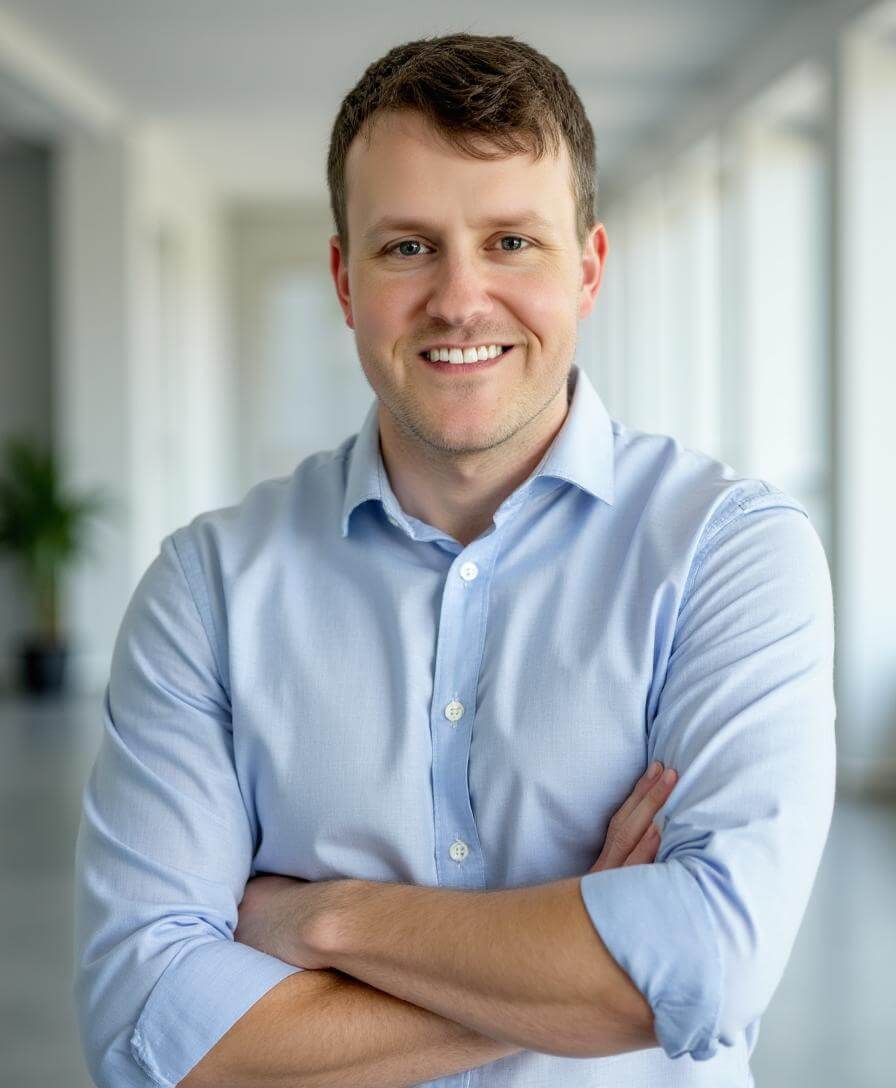
Agents are becoming the new front door. Most websites aren't ready for them, and that's a fixable problem — usually a smaller one than people think. I'm Tyler. I authored the open standard for agent-operable businesses (OARS, at Knov.ai) and I help teams figure out what to actually do. Start with a free scan, read the standard, or just talk it through.

Some incredible clients

Big House Partners logo Canadian National Railway logo Costco logo Independent Can logo Fuchs logo Mullin/Ashley logo Designit Logo Zipfizz Logo United Way logo Microsoft Logo Clayjar Logo Spark offices logo Cross Street Realtors Logo LAX Airport logo Fortifi Food Solutions logo Pivot Creative logo
tyler willis — author of the open agent readiness standard

Author of OARS, the open agent-readiness standard

Accepting new clients and consulting work

[01] — premise Why this exists

Most "AI readiness" advice falls into two camps: panic ("you're already behind!") or vague reassurance ("just keep doing what you're doing"). Neither helps. The truth is that becoming agent-ready is a sequence of concrete, well-defined steps — and most of them are simpler than they sound. The work below is what I do to make that sequence visible, learnable, and doable for any business.

[02] — the standard OARS · v1.1

OARS, in six levels.

The open agent-readiness standard I wrote at Knov.ai breaks "ready for AI" into a real ladder. Each level requires full compliance with the one beneath it. Most businesses sit between Levels 1 and 2 today, often without knowing it.

Level 0

Reachable

The site is operationally usable by an agent at all — HTTPS, real uptime, Core Web Vitals that don't time out, baseline security headers, and no CAPTCHAs blocking verified agents. The floor everything else stands on.

Level 1

Discoverable

An agent can find and identify your business — what you do, where you operate, what you sell, which agents you welcome. Mostly small, one-time work: robots.txt, sitemap, Schema.org, llms.txt.

Level 2

Readable

An agent can comprehend you well enough to answer customer questions on your behalf — services, pricing, hours, policies, the things you can and can't be trusted on. Content and schema work, usually a few weeks.

Level 3

Actionable

An agent can take real actions on your systems — booking, quoting, querying — through a documented API and an MCP server with scoped, observed, reversible tools. The first level where engineering shows up in earnest.

Level 4

Transactable

An agent can complete commercial transactions end-to-end on a customer's behalf — pay, book, ship, receipt — with delegated authorization, signed identity, and audit trails an accountant would accept.

Level 5

Operable

Agents help run the business itself — intake, scheduling, triage, processing — with human oversight and documented handoff rules. Most businesses won't need this. The ones that do, will compound.

[03] — what's new

What's actually new about all this.

The web has had standards for a long time. HTML let browsers read pages. robots.txt told crawlers where to go. Schema.org gave search engines a vocabulary. Each one made a new kind of software useful on the web.

OARS does the same thing for AI agents — open, vendor-neutral, free for anyone to implement. I write and maintain it because the gap was obvious and nobody else was filling it in a coherent way, not because I needed another credential.

Everything on this site flows from that standard. The consulting is implementing it. The training is teaching it. The tools are measuring against it. The data work is mapping how the rest of the web is adopting it.

the open agent readiness standard, by tyler willis

Open standard — read it, implement it, free

Levels 0 through 5 — progressive, measurable

[04] — consulting Three tiers

Three ways to engage on the work.

Same person from first call to last. Each tier is priced clearly, scoped honestly, and grounded in the OARS standard — so you can start small and only go further if the next step makes sense.

Start here

Audit

$2,500 – $5,000 · Fixed scope, fixed price. A five-layer look at where you stand on OARS, with a scored report and a roadmap you could execute yourself. Most people start here.

Build it

Implementation

$10K – $75K · Modular by OARS layer — schema, MCP server, booking and action layer, operational workflows, analytics. Pick the modules that matter; skip the rest.

Keep it healthy

Retainer

$2,500 – $10K / month · An ongoing relationship to maintain, monitor, and evolve your infrastructure as the agent ecosystem moves under it.

[05] — intelligence

A live dataset on the agent web.

The consulting is informed by — and feeds back into — an open intelligence dataset on the AI automation and agent-readiness space. Tools, benchmarks, playbooks, case studies, and the broader market landscape, refreshed continuously and queryable through the web, an API, or an MCP server.

It's part of why a conversation with me starts further down the road than usual. You're not paying me to learn the space on your dime.

live ai automation intelligence dataset maintained by tyler willis
[06] — other work Free + paid

Adjacent work, if you've poked around.

The consulting is the main thing, but it isn't the only thing. A few other places the work shows up — useful on their own, no commitment to anything bigger.

Free

Tools

Scan your domain against OARS, see what AI assistants say about you, audit your schema. No signup. Built primarily so I have honest measurement — left public because there's no good reason not to.

Subscriptions

Done-for-you products

Managed automation products for freelancers, agencies, and small teams — daily pipeline, fast proposals, reactivation, earned media. They run on my infrastructure and deliver to your inbox.

For practitioners

Training & certification

A course, a certification, and a verification program — taught by the person who wrote the standard. For developers, agencies, and consultants who want to do this for their own clients.

[07] — free, no signup, no upsell

Track your OARS score over time.

Add your domain once. I'll rescan it monthly and email you when something meaningful changes — a new level unlocked, a regression, a long-missing field that finally got added. Use it on your own site, a client's site, or a competitor you're watching.

[09] — not sure where to start?

Let's just talk it through.

If you'd rather not pick a door, send me a note and tell me what's on your mind. I'll respond personally and tell you honestly what I'd do in your shoes — even if it's "do nothing yet" or "you don't need me for this."

I respond personally within 1 business day. No pitch — just a real conversation.

[10] — FAQ Common questions

Common questions

Plain-language answers to the things people ask me most often when they're new to all this.

What is OARS, in one sentence?

An open standard that describes what it means for a website to be useable by AI agents — broken into six clear levels, from "an agent can reach your site at all" up to "an agent can run things for you." It's free to read, free to implement, and lives at Knov.ai.

Do I need to be technical to care about any of this?

No. You need to be technical to build some of it, but you don't need to be technical to understand whether your business is ready, or to decide whether it's worth the investment. That's what the audit is for — I translate the technical picture into a business decision.

Is this just SEO with a new name?

It overlaps with SEO — agent-readiness includes some of the same things, like good schema and a healthy sitemap — but the goal is different. SEO is about being found by a person who's searching. Agent-readiness is about being actionable for software that's deciding on someone's behalf. Same web, different consumer.

Where should I actually start?

Run the free OARS scanner against your site. It takes seconds and gives you a real Level 1–2 score. If the score is low, you'll have specific things to fix — which you can do yourself, hand to your developer, or talk to me about. If it's high, you'll know where to focus next.

Do you only work with technical clients?

No. Most of my clients aren't engineers. The job of the consulting is to turn the technical work into business outcomes — booked calls, served customers, retained traffic — so you don't have to learn the stack to benefit from it.

What does it cost to get started?

Nothing for the free tools and the standard itself — those are designed to be useful on their own. The audit starts at $2,500 and is fixed-price; implementation work starts at $10K and is modular; retainers start at $2,500/month. The consulting page walks through each tier.

How do I keep up with this if I'm not ready to do anything yet?

Start the free monthly monitor on your domain. You'll get an email when something changes. No commitment, no upsell — just a quiet way to know where you stand as the web shifts under everyone.